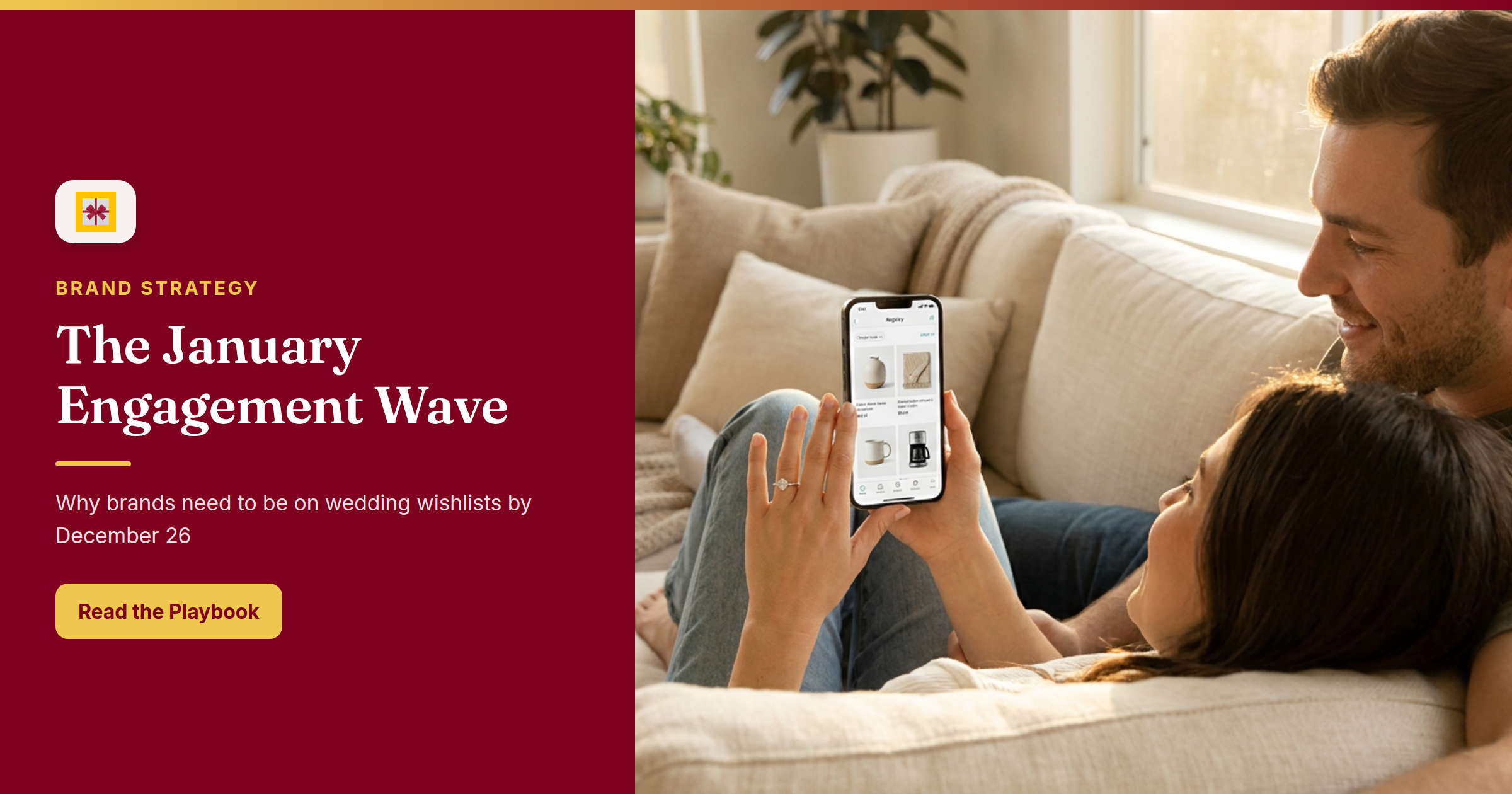
Roughly 40% of annual engagements happen between Christmas Day and Valentine’s Day. Every wedding registry brand strategy that doesn’t account for this window is starting from the wrong place. The surge peaks in one narrow band: December 25 through January 8. That is not a slow retail period. That is the single highest-density registry-creation moment of the year — and most brand marketing teams treat it like a holiday hangover.
The ones who treat it like a runway don’t miss it.
The Surge Nobody Plans For
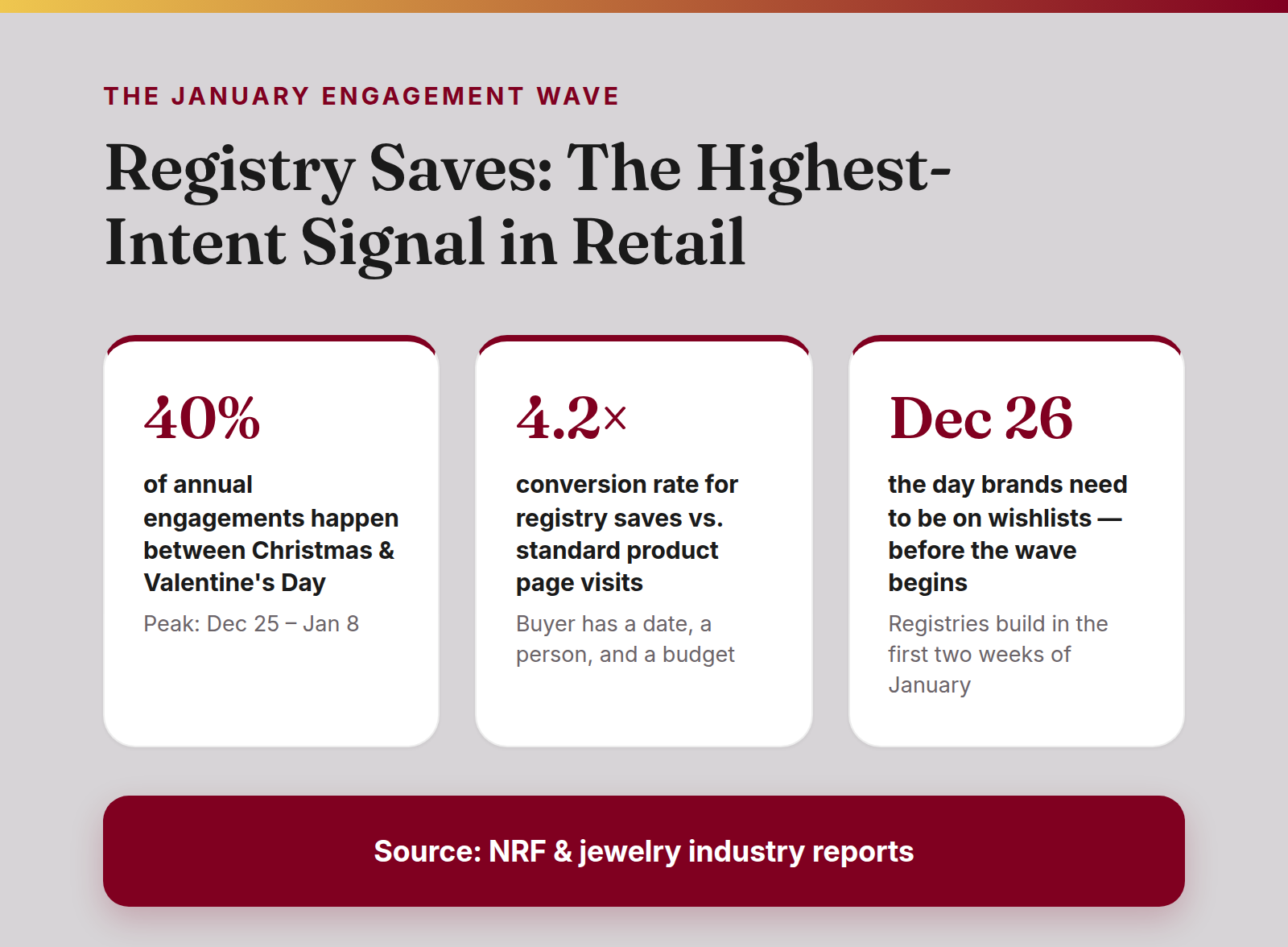
The data is clear. NRF and jewelry industry reports consistently place December 25 and New Year’s Day as the top two proposal days of the year, followed by Christmas Eve, Valentine’s Day, and the surrounding weekend. By January 10, couples who said yes on Christmas morning have already been engaged for two weeks — and the registry is often the first “official” task on the list.
This is a narrow window with a steep conversion cliff. A brand that earns a slot in a couple’s registry on January 2 retains that intent signal for months. A brand that doesn’t exist on any registry by February 14 misses the season entirely.
The math matters: products saved to a registry convert at 4.2x the rate of a standard product page visit. The buyer has a date, a person, and a budget. They are not browsing. They are executing.
Why Registry Saves Outperform Every Other Demand Signal
Cart abandonment is noise. Social engagement is aspiration. A registry save is a declaration.
When a couple builds a GiftHintz registry using any-URL import — pulling in products from your website, a curated Vibe Board, or any other store — they are doing the work of a conversion funnel on your behalf. They are:
- Selecting your product by name
- Assigning a dollar amount to it
- Distributing that selection to every person motivated to buy them a gift
That third step is the one most brand dashboards never see. A registry item gets shared with a warm audience who already has purchase intent. It is the only marketing touchpoint where the consumer does the targeting for you.
On GiftHintz, that distribution happens through Hint Requests — where a giver asks the couple what they want and receives a curated share from the registry — and through the Discovery Feed, where wishlist saves from multiple users signal which items are trending. Your product doesn’t just appear in one couple’s registry. It surfaces in the feed of every giver in their circle.
Your URL Is Your Product Listing

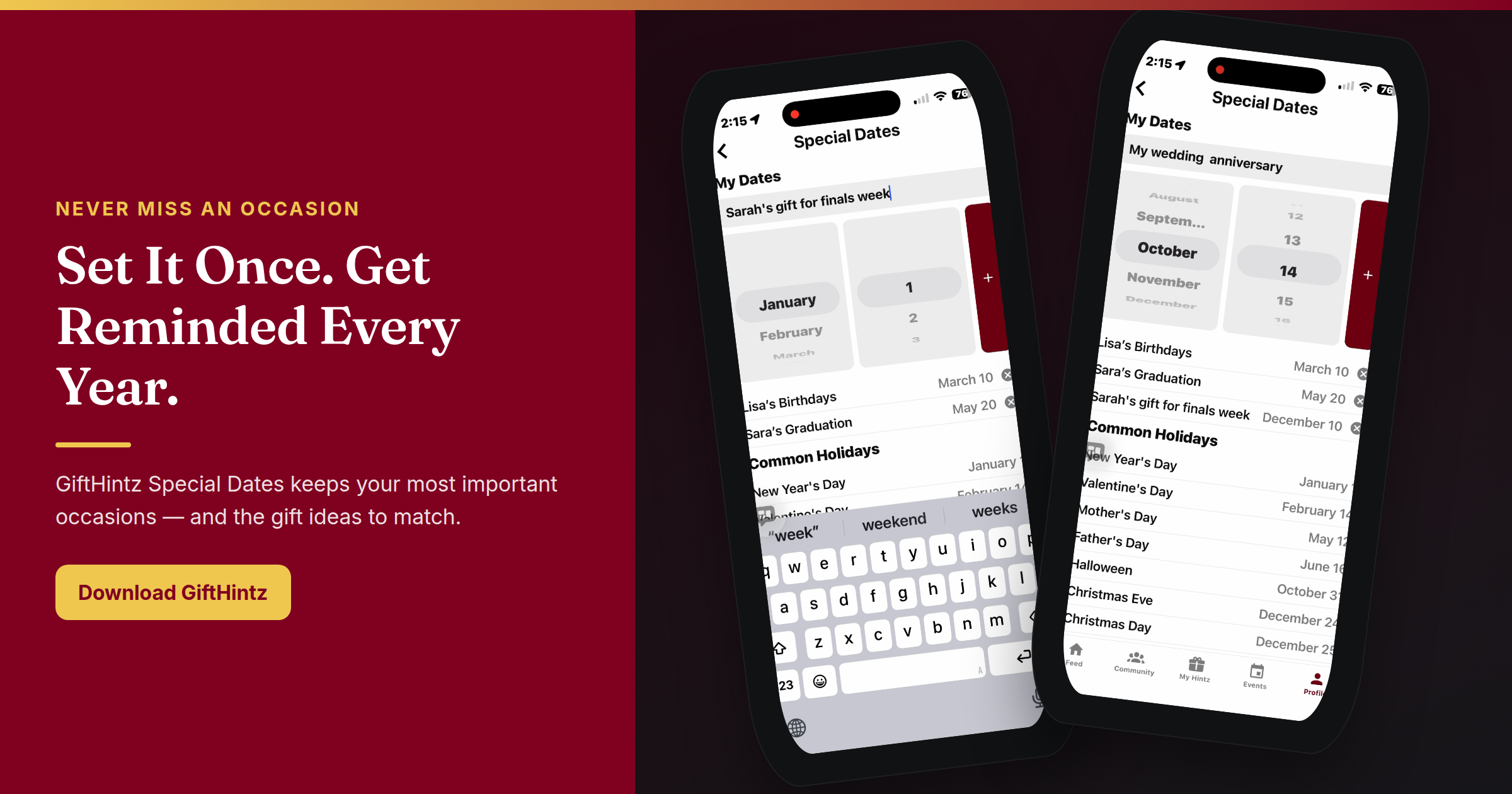
The universal wishlist has replaced the scanner gun. Couples don’t walk a single store anymore. They open a tab, paste a URL, and the app extracts the image, title, price, and link automatically.
GiftHintz’s any-URL import works exactly this way: a couple opens your product page, shares the URL, and the item is in the registry in under ten seconds. That frictionless flow means your product page is the entry point. If the import breaks — missing price, unclean URL structure, broken image — the couple moves to the next tab. The next tab wins.
Registry-readiness is a technical standard most brands have never audited. The checklist is short:
- Clean hero image on the canonical URL — uncluttered, square or 4:3, no overlay text
- Price visible in structured data — schema.org markup; a JavaScript-rendered price that loads late extracts as zero
- Canonical URL without tokens — no session IDs, redirect chains, or embedded UTM parameters
- Product title under 80 characters — extracted titles truncate; front-load the meaningful words
Fix these four things and your products get into registries. Leave them broken and you’ll never know how many couples pasted your URL and moved on.
Wedding Registry Brand Strategy for 2027: Three Steps Before December 26
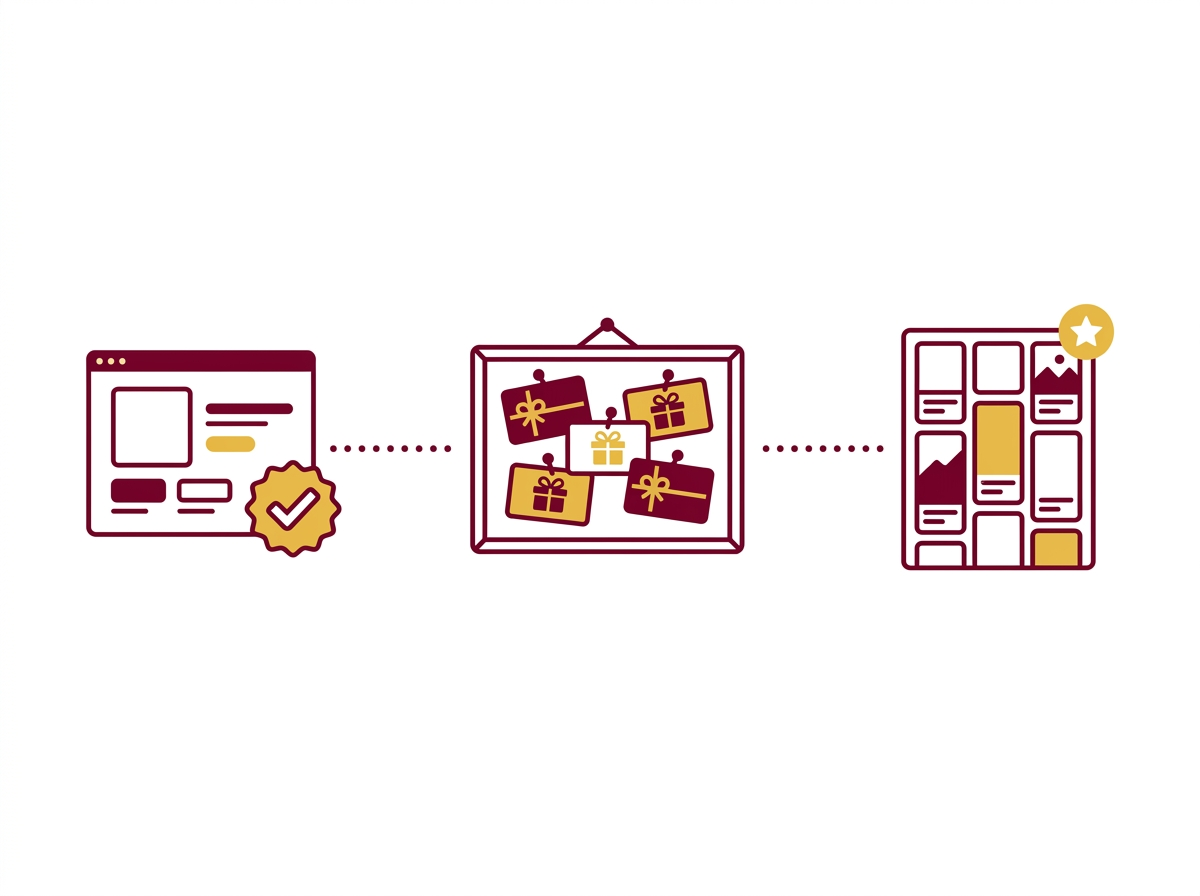
Step 1: Audit your importability.
Run your top ten product pages through a structured-data checker. Confirm each has a parseable price, a canonical URL, and an accessible hero image. Shopify defaults are generally clean; custom builds often aren’t. Do this now — not in January.
Step 2: Get onto creator wedding boards.
GiftHintz Vibe Boards built by curators with engaged-couple audiences are the discovery layer that precedes the registry save. When a couple follows a creator’s “Wedding Registry Essentials” or “Newlywed Home Starter” board, they clone items directly into their own wishlist. That clone carries attribution — the creator earns a commission and your product earns organic placement alongside complementary items.
Identify two or three wedding-adjacent creators in your niche — home goods, kitchen, travel, apparel — and get your SKUs onto their GiftHintz boards before Christmas. A board published on December 15 has two weeks to build an audience before the engagement surge begins.
Step 3: Claim your brand presence and sponsor the Discovery Feed.
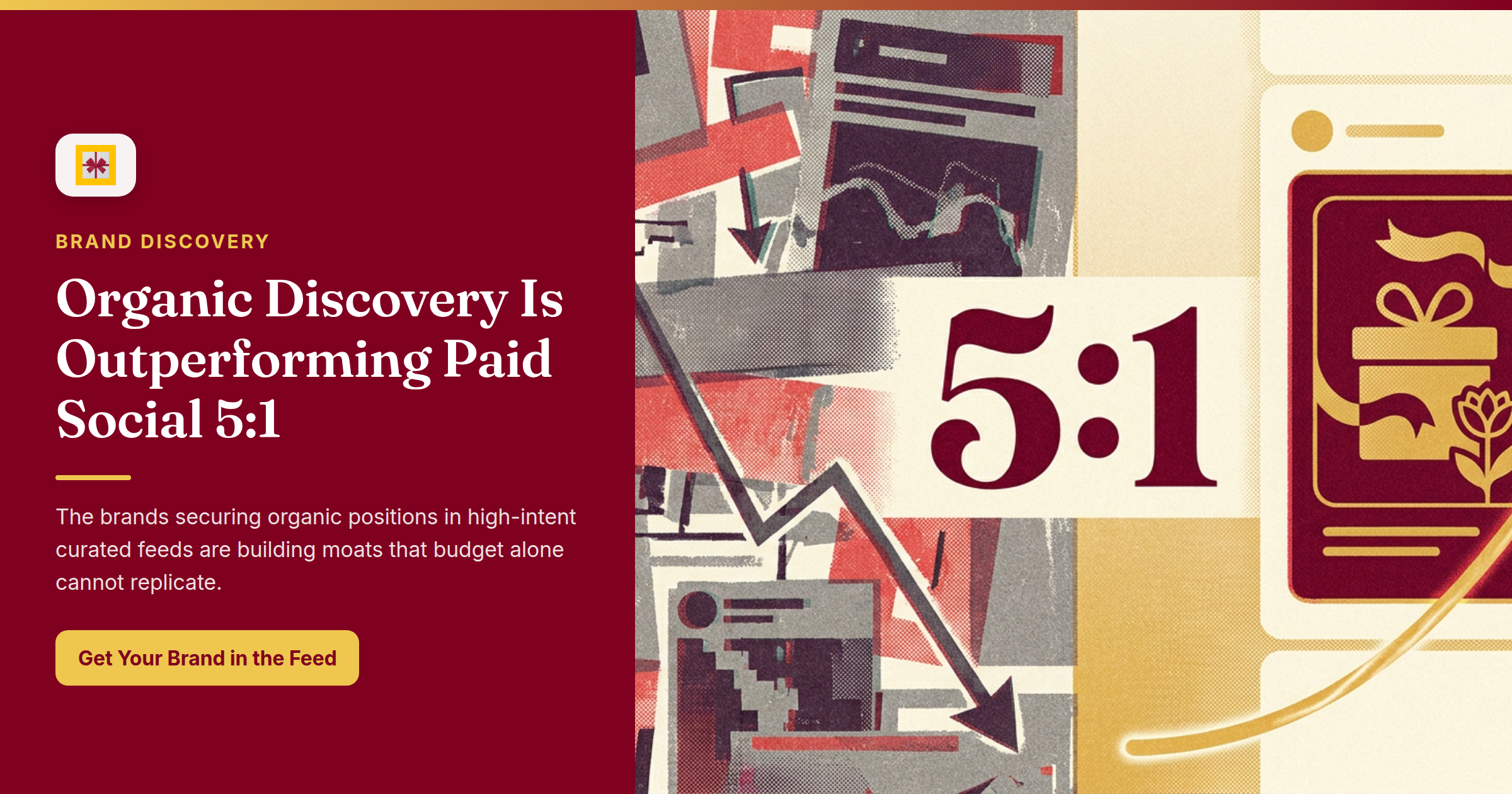
GiftHintz’s Brands feed surfaces organic and sponsored content to users actively browsing for gift ideas. A sponsored placement during the January engagement window puts your brand in front of the exact audience — givers who have a newly engaged person in their circle and are actively researching what to buy them.
Brands that claim their presence before the season lock in priority placement against an audience that no ad auction has yet reached.
Your Runway Ends December 25
By the time January GMV reports surface, the registries are already built. The givers are already buying.
Audit your product pages for registry-readiness — clean images, clear pricing, importable URLs — and get your brand on GiftHintz before December 26. The engagement wave starts the day after Christmas. The brands already on the list are the ones couples share with their families at New Year’s dinner.