Every holiday season, roughly one in three gifts gets returned. That’s not a bad-luck streak — it’s a structural problem. The gift returns problem has a real solution, and it isn’t "shop more carefully." It’s information. Givers are guessing. Receivers are too polite to say what they want. The result: an estimated $28 billion in returned holiday merchandise every year, plus a drawer full of things nobody asked for and a return-line queue that ruins January.
There’s a one-step fix. It’s called a Hint Request. Here’s how it works.
The Gift Returns Problem, by the Numbers
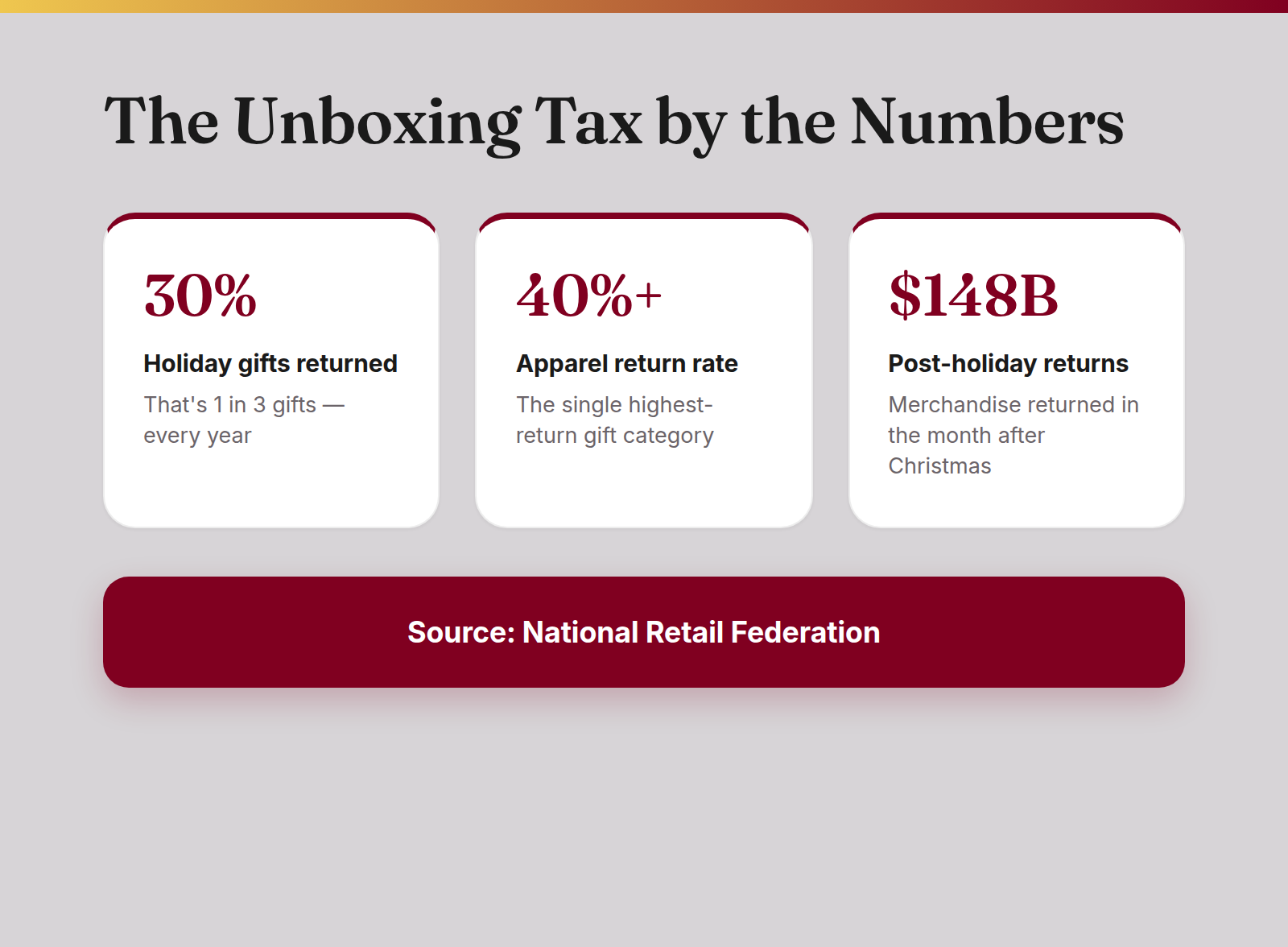
Return rates on holiday gifts hover between 20–30% by value. Apparel hits 40% or higher. Electronics aren’t far behind. The National Retail Federation estimates over $148 billion in merchandise gets returned in the month after Christmas — a number that climbs every year, because online shopping makes it faster and easier to buy the wrong thing.
The financial figure is bad. The social figure is worse.
Someone spent real money on you. They thought about it — at least a little. You opened it, held the smile for three seconds, and spent the next ten minutes calculating whether you can find the receipt without making it a whole thing. That’s the holiday gift return rate in human form. Exhausting for both parties, and completely avoidable.
Why a Wishlist Isn’t Enough
Wishlists exist. Most people don’t maintain them. The ones that do are often forty items spread across six price ranges with no signal of priority. A wishlist is a passive artifact — it sits there. It doesn’t communicate what someone actually wants right now, at this budget, for this occasion.
So the giver still guesses. They pick something from the middle of the list and hope. Then they spend December hoping they won’t be the story at the next dinner party: "Oh, they got me a wool scarf. I’m allergic to wool."
The wish list for gifts idea is right. The execution is missing.
The Hint Request: A Conversation, Not a Guessing Game
The hint request app approach flips the dynamic. Instead of the receiver waiting and hoping, the giver initiates. They send a structured ask: occasion, budget, a short personal note. The receiver gets that message, opens their wishlist, and shares back only the items that fit — the ones they actually want, at the right price, for this specific moment.
The giver doesn’t get forty options. They get a curated shortlist from the one person who knows exactly what they want. Then they buy it.
No guessing. No bad gifts. No return line.
How It Works in GiftHintz
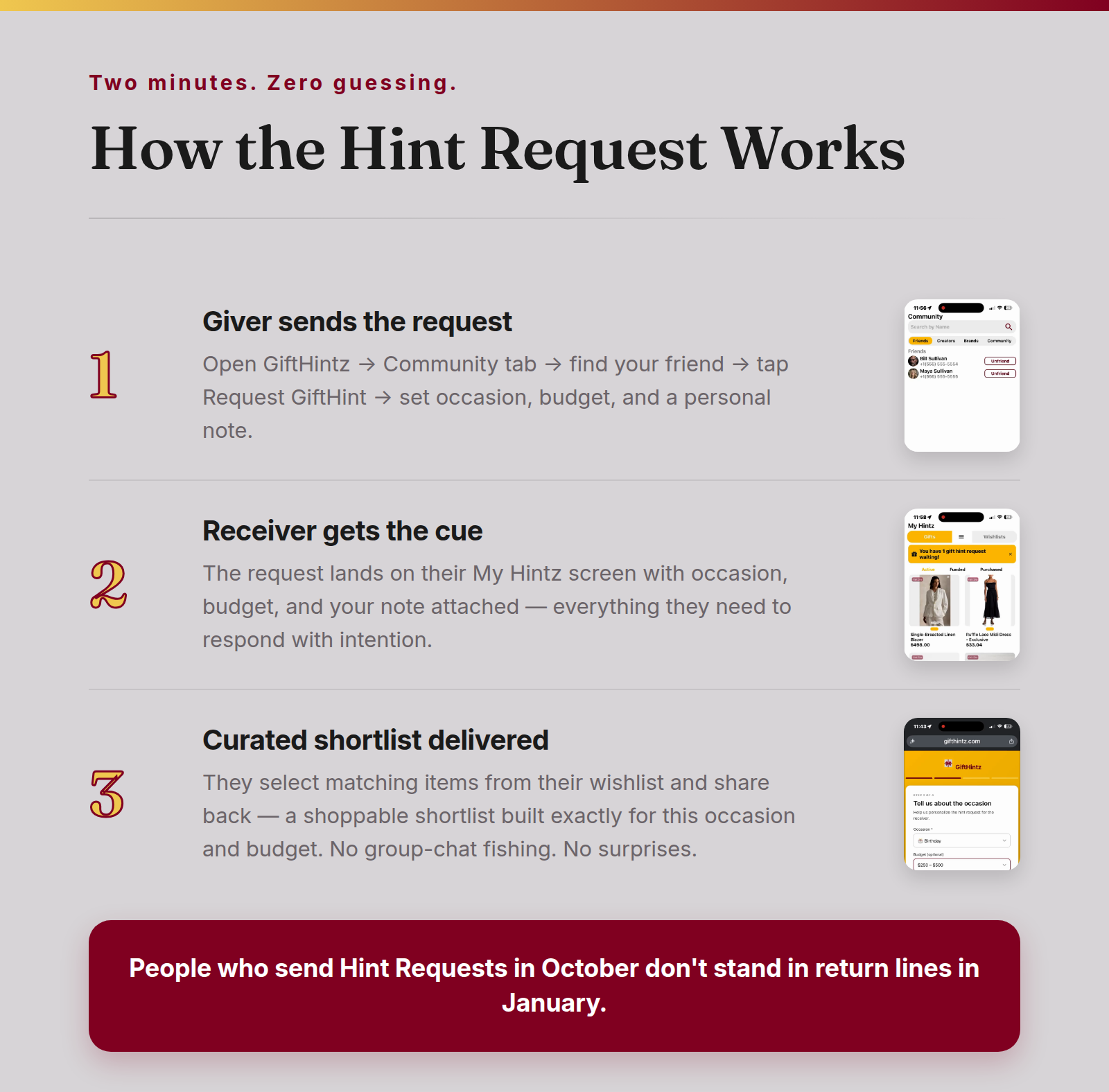
The full flow takes two minutes.
The giver’s side: Open GiftHintz, go to the Community tab, find your friend. Tap Request GiftHint. Choose the occasion — birthday, holiday, anniversary. Set a budget range. Add a short note so they understand what the moment means. Send.
The receiver’s side: The request lands on their My Hintz screen with all the details attached — occasion, budget window, your personal note. They open their wishlist, select the items that fit, and tap Share. You get a shoppable shortlist built exactly for what you asked for.
No group-chat fishing expedition. No "just surprise me" followed by a January return receipt. A real signal, answered with intention.
The Hidden Cost of Gift Regret
There’s a number that doesn’t show up in retail reports: the cost of gift regret to the giver.
You spent $60. You thought about it. You wrapped it. You watched them smile in a way that didn’t quite reach their eyes. That moment — gift regret — quietly erodes your confidence in giving. It makes you default to gift cards next year. Gift cards are fine, but they feel like giving up.
Avoiding bad gifts isn’t just about sparing the receiver an unwanted item. It’s about restoring the giver’s belief that generosity is worth the effort. When you know you bought the right thing, giving becomes something you want to do again.
Run This Playbook Before Holiday Shopping Starts

The move is to send Hint Requests in October, before anyone enters panic-buy mode.
- Send early. Open GiftHintz and send a Hint Request to three or four people on your list you always struggle with. Set the occasion to "Holiday" and add a budget range.
- Let them curate. They’ll respond with wishlist picks that match. You now have a pre-approved shortlist for every hard-to-buy-for person — ready before the shelves empty.
- Buy with confidence. The shortlist is shoppable directly inside GiftHintz: tap the item, land on the store, done.
- Enjoy the unboxing. When someone opens something they actually wanted, that’s not luck. That’s infrastructure.
People who send Hint Requests in October don’t stand in return lines in January.
Stop Paying the Unboxing Tax
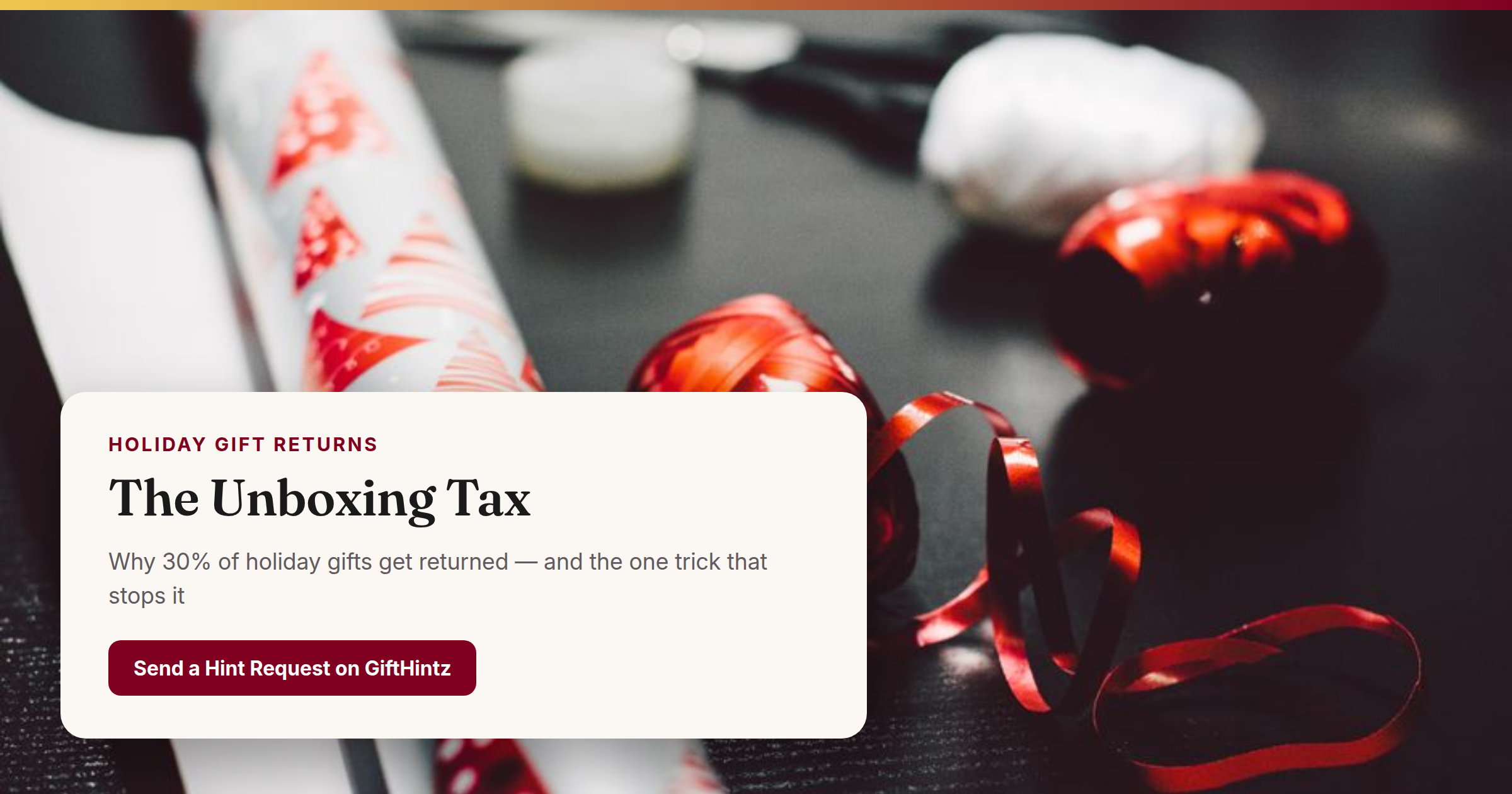
Thirty percent of holiday gifts get returned. That’s not inevitable — it’s the cost of guessing. The gift returns problem solution is a conversation that happens before the purchase, not a surprise with a return label waiting in the wings.
Send your first Hint Request on GiftHintz before holiday shopping starts — ask your loved ones what they actually want and watch return rates drop to zero.