An add-to-cart is a shrug. A wishlist save is a declaration.
Shoppers who save a product to a wishlist have crossed a threshold that a cart event never reaches. They’ve said: this is mine eventually — not I might buy this before I close the tab. The difference between those two signals is the difference between a warm lead and a live one. For brands spending on acquisition, it’s the difference between paying to reach someone who forgets you and paying to reach someone who already told you they want what you’re selling.
The signal has been sitting in plain sight. Most brands don’t have infrastructure to act on wishlist saves intent signal in real time. GiftHintz was built to change that.
Cart Abandonment Is a Symptom. Wishlist Ignoring Is the Disease.
Shopify’s data has long established that cart abandonment hovers around 70%. Recovery emails convert at 5–10%. Brands pour budget into that 5–10% because it’s the best re-engagement signal they have. But here’s what that math ignores: wishlist saves, when tracked, convert at substantially higher rates than abandoned carts — because the intent was never ambiguous.
A cart abandonment can mean a dozen things: sticker shock, a distraction, deciding to comparison shop, the baby woke up. A wishlist save means exactly one thing. The shopper wants the item and intends to return.
The problem is structural. Most wishlist data lives locked inside a single retailer’s database, invisible to brands, inaccessible for targeting, and disconnected from the social graph that would amplify it. Brands partner with influencers to drive discovery, then lose the trail the moment someone leaves the creator’s link and browses on their own. Social commerce data has a fundamental attribution gap: the intent signal exists, but no infrastructure connects it back to the brand.
That gap is where GiftHintz operates.
The Three Intent Layers GiftHintz Surfaces for Brands
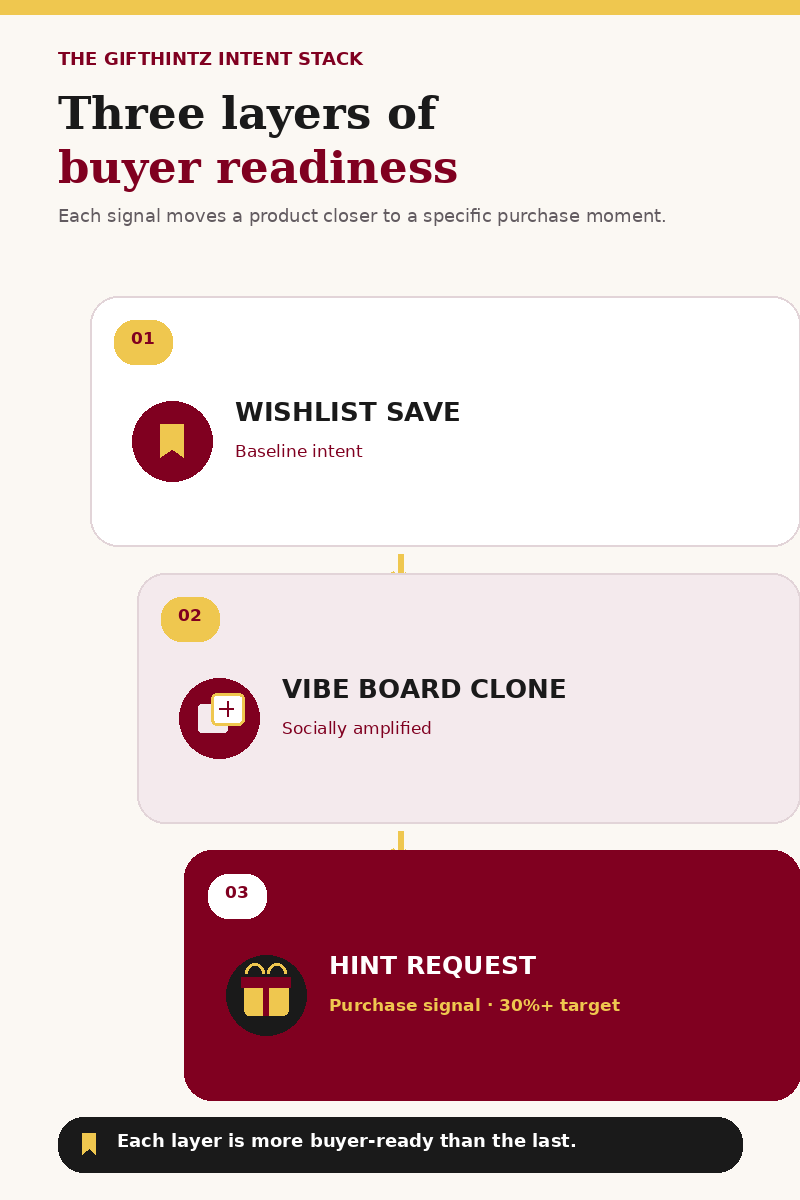
GiftHintz’s architecture routes buyer intent through three distinct, trackable layers — each one progressively warmer than the last.
Layer 1 — Wishlist Saves
A user saves a brand’s product to their Universal Wishlist. This is the baseline. The product is now part of an active, curated list that the user maintains, shares, and revisits. Unlike a cart, wishlists don’t expire. They don’t get abandoned. They compound as occasion-specific lists form around gifts for upcoming events.
Layer 2 — Creator Vibe Board Placement
A Curator — one of GiftHintz’s creators — adds a brand’s product to a Vibe Board. The brand’s item now lives inside editorial content with a built-in audience. When followers clone that item to their own wishlist via Clone-to-Wishlist, every downstream save carries the original attribution. One creator placement can trigger dozens of wishlist saves across users the brand never reached directly. This is product discovery with a social multiplication effect.
Layer 3 — Hint Request Activation
A Giver sends a Hint Request to a Receiver: I want to buy you something for your birthday — what do you actually want? The Receiver shares their wishlist. The Giver reviews specific items, selects one, and buys. At this layer, the brand’s product isn’t being browsed — it’s being purchased for a specific person on a specific date. Purchase conversion on Hint Requests targets above 30% within seven days. That is not a funnel; it’s a closing signal.
Brands that can see across all three layers — saves, Vibe Board placements, and Hint Request activations — have a real-time map of where their products sit in the consumer decision journey.
The Brand Dashboard: From Signal to Strategy
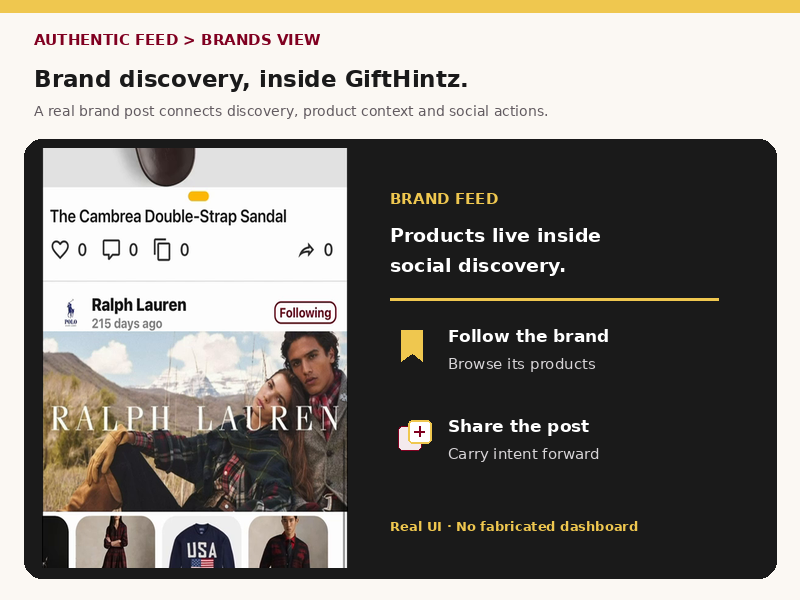
The GiftHintz Brand Dashboard gives brand partners direct visibility into how their products move through the platform’s three-sided marketplace.
What brands can see:
- Which specific products are being saved to user wishlists
- Which creator Vibe Boards feature their products and the engagement those boards generate
- Wishlist items that have been activated by Hint Requests — the moment a product is actively in play for a purchase
What brands can act on:
- Sponsor placements in the Discovery Feed to amplify organic wishlist saves for top-performing products
- Receive alerts when a Giver activates a Hint Request that includes a brand’s item — the highest-intent moment in the platform
- Identify which creators are organically featuring their products to inform formal Brand Ambassador outreach
This replaces guesswork with a social commerce data layer that maps to real purchase intent, not estimated reach.
Case Study Outline: DTC Brand Reducing CAC via Wishlist Targeting
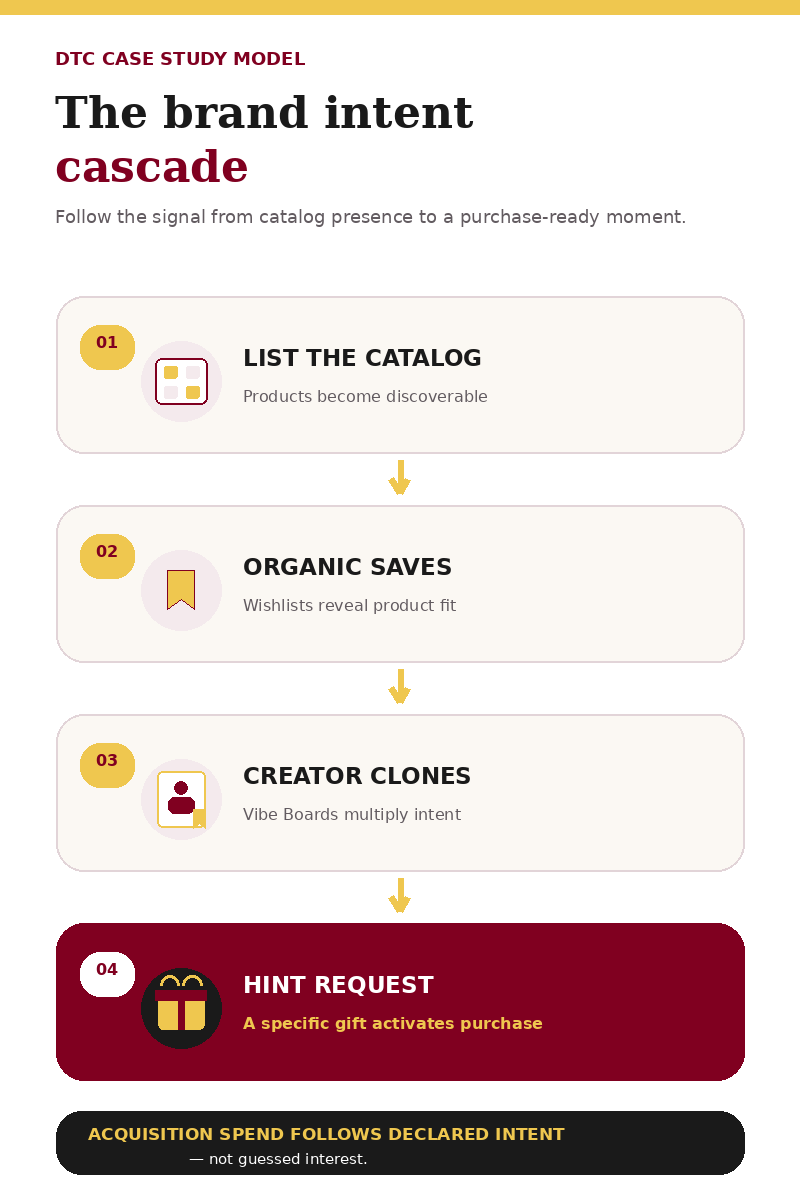
Here is the operating model for a DTC brand entering GiftHintz’s early access program.
Starting position: A DTC candle and home fragrance brand. Strong product, reasonable CAC on paid social, but high return rate and low repeat purchase — signals that discovery-to-intent matching is weak. Customers are clicking ads impulsively; the product isn’t landing with the right person at the right moment.
GiftHintz entry point: The brand lists its catalog in the platform. Within the first 60 days, Brand Dashboard data shows that three products are appearing organically in user wishlists — specifically in occasion-tagged lists labeled “housewarming gifts” and “birthday ideas for my mom.”
Creator activation: The brand identifies two Founding Curators whose Vibe Boards have high engagement from the Receiver segment that matches their customer profile. They initiate a Brand Ambassador arrangement through GiftHintz. The curators build branded storefronts — selecting the brand’s visual identity, writing editorial context, and curating the specific products that fit their aesthetic. The storefronts go live in the Discovery Feed.
The intent cascade: Followers clone from the curator boards to their wishlists. Hint Requests start activating on those items. The brand sees alert notifications: specific products, specific occasions, specific purchase windows.
Result: CAC drops because the brand is no longer paying to generate intent — the wishlist infrastructure generates it continuously. Sponsored placements in the Discovery Feed target users whose wishlists already include the brand’s products, making retargeting precision-matched to declared intent rather than inferred interest.
This is brand partnership platform dynamics at their most efficient. You’re not buying attention. You’re entering an active decision.
What Early Access Looks Like
GiftHintz’s Brand Dashboard is in early access. Brands that partner now establish catalog presence and begin accumulating wishlist save data before the platform’s user base scales into holiday season volume.
The brands that arrive when the signal-to-noise ratio is highest — before the Discovery Feed is saturated — own the most valuable placements and the cleanest data. That’s not a marketing pitch. That’s how intent platforms work at every stage of growth.
Request early access to the GiftHintz Brand Dashboard to see how your products are being saved and shared across our three‑sided marketplace.