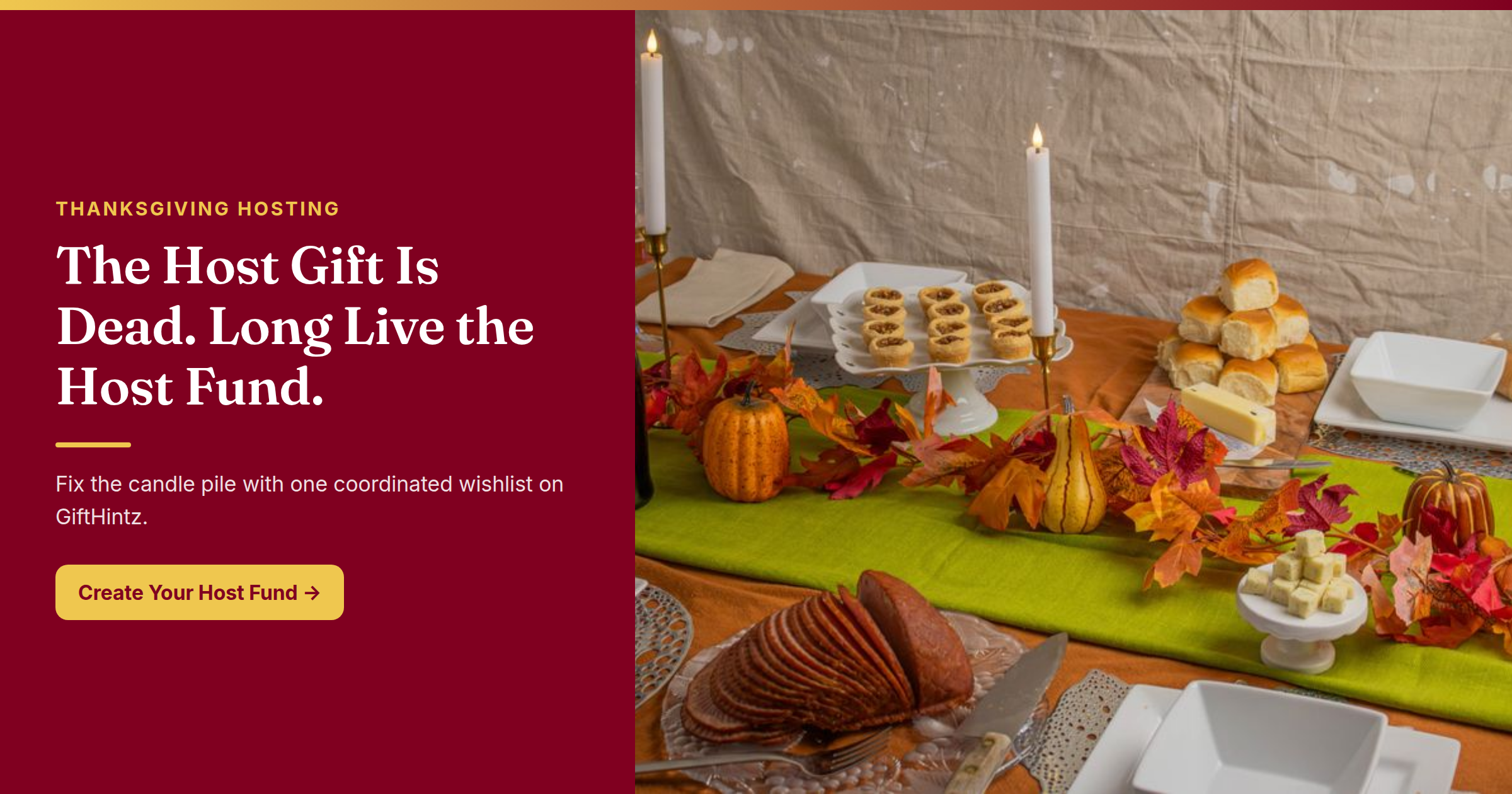
Here’s what Thanksgiving’s host gift tradition looks like in practice: sixteen guests each decide independently to bring a candle, a bottle of wine, or a box of chocolates. The host ends up with eleven candles, three identical Pinot Grigios, and a basket of chocolates nobody asked for. Meanwhile, the Cuisinart the host actually wanted sits untouched in a wishlist they’ve been adding to since June.
Thanksgiving host gift ideas have not evolved. The tradition says "bring something small," so everyone does — and small things pile up into a coordinated nothing. This post is about fixing that without making your group text weird.
Why Group Gifts for Hosts Have a Bad Reputation
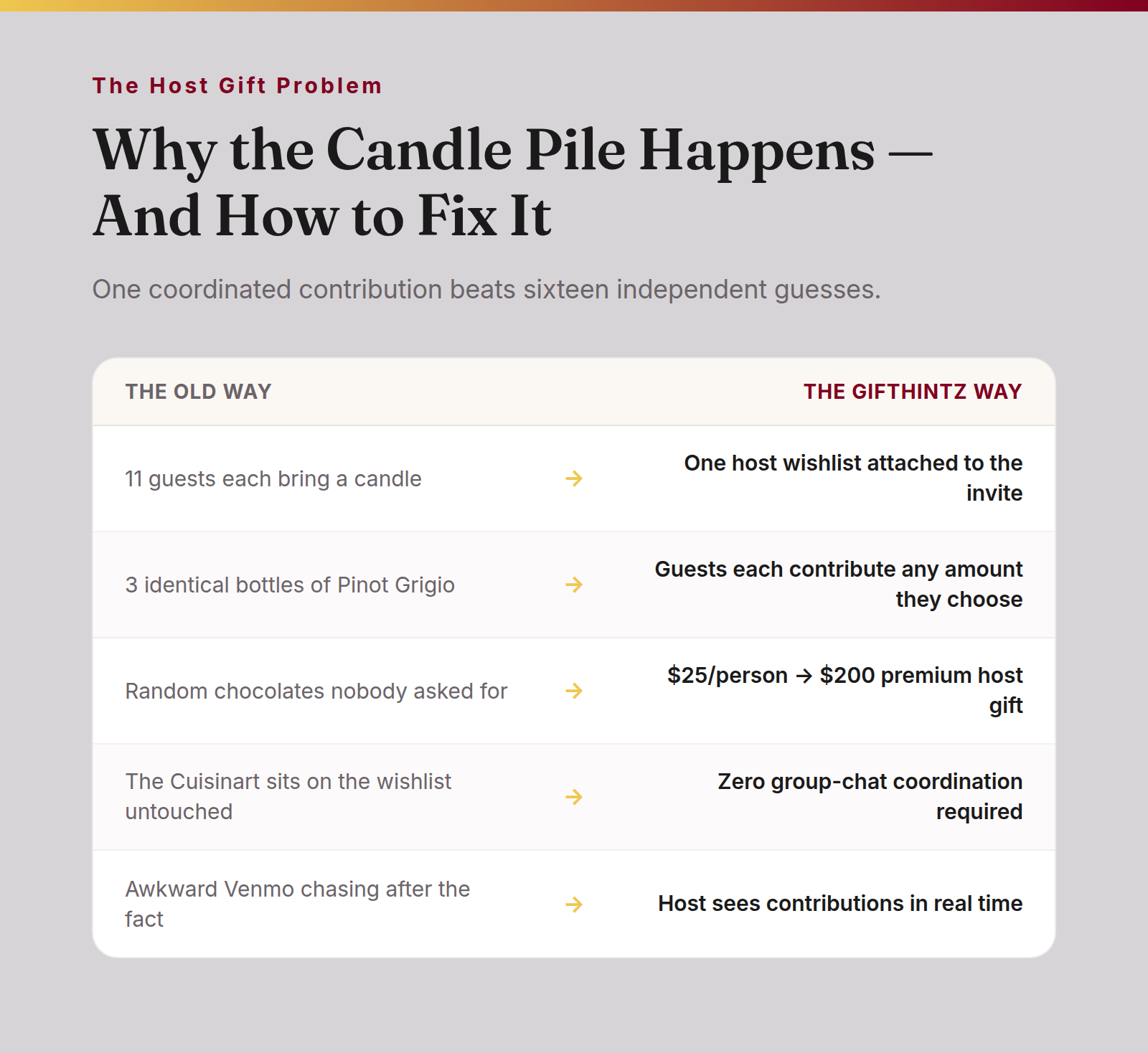
The phrase "group gift for the host" makes people uncomfortable for exactly one reason: it sounds like an invoice. When someone in the group chat types "I was thinking we could all chip in for something nice," the subtext everyone hears is you owe me money now.
The awkwardness isn’t the idea. It’s the execution. Collecting contributions after the fact over Venmo, chasing people down a week later, and then debating what to actually buy — that’s a social tax nobody asked to pay. The proposal feels transactional. The follow-through is exhausting. And the host, who didn’t ask for any of this, ends up feeling vaguely like the subject of a fundraiser.
But there’s a version of this that’s genuinely graceful, and it solves the problem at the source: it happens before anyone shows up, through the invitation itself.
The Etiquette of a Host Fund That Doesn’t Offend
Here’s the difference between an awkward group gift ask and an elegant one: the graceful version doesn’t ask at all.
When a host’s gift wishlist is attached to the event invitation before it goes out, guests don’t receive a pitch — they receive a resource. There’s no "can everyone chip in?" message. No one gets tagged in a thread. There’s no pressure to hit a specific amount or explain why they’d rather just bring wine. There’s just an invitation with an optional wishlist, and guests who want to contribute to something meaningful can do so on their own terms, on their own timeline.
The key is that the host doesn’t propose the fund — the invitation structure makes it a natural option. Nobody’s being cornered. Nobody’s being asked for money. The door is simply open, and guests decide whether to walk through it. That’s the etiquette fix.
For Friendsgiving in particular, this lands even better. Among tight friend groups, the expectation of a host gift is already implicit — a coordinated contribution just upgrades the gift from a wild guess to something the host actually wants. For more formal family Thanksgiving gatherings, the wishlist functions as a soft opt-in: guests who want to do more than a candle have a concrete option, and everyone else can still bring wine without any awkwardness.
What to Put on the Host Gift Wishlist
The point of a host fund isn’t to invoice your guests. It’s to give the people who genuinely want to do something meaningful a better target than guessing at a gift shop. One well-chosen item is all you need.
Categories that work well:
- Kitchen investment pieces — a quality Dutch oven, carbon steel pan, or hardwood cutting board. High-ticket, high-appreciation, and impossible to accidentally duplicate.
- Experience gifts — a cooking class, a wine tasting, a Michelin restaurant reservation. Nothing to stack in a cabinet.
- Premium pantry staples — high-end olive oil, finishing salts, aged balsamic. Consumable, seasonal, and actually used within the month.
One item per wishlist keeps it purposeful. The goal isn’t a full registry — it’s a single meaningful option that lets your guests show up differently than eleven-candles worth.
How This Works in GiftHintz
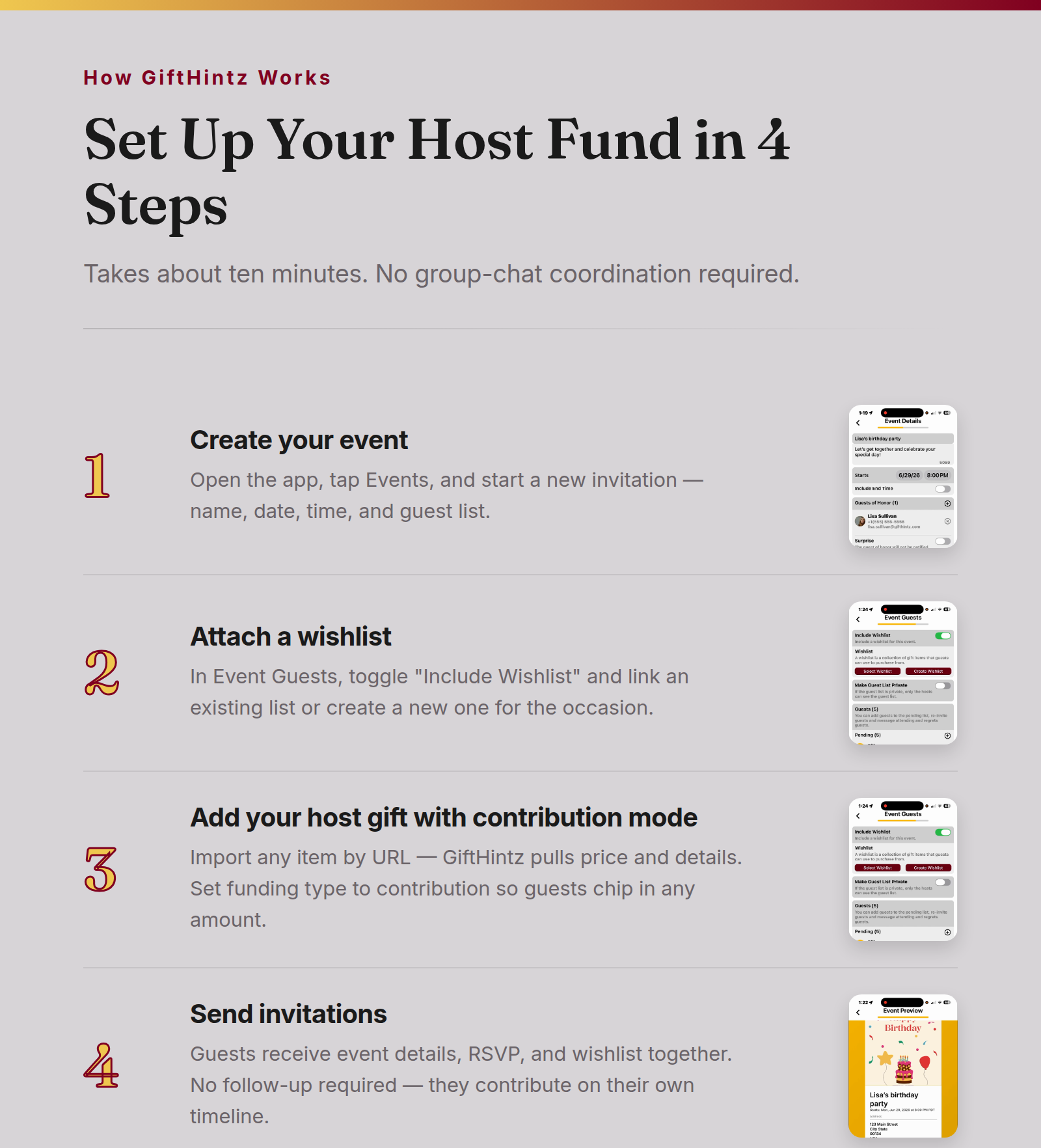
GiftHintz’s Event Invitations are built precisely for this kind of coordination. When you create a Thanksgiving or Friendsgiving event in the app, you can attach a wishlist directly and enable Group Funding on any item — so guests can pool contributions toward one high-value host gift, each contributing any amount they choose.
The setup takes about ten minutes:
- Create your event. Open the app, tap Events, and start a new invitation. Add the event name, date, time, and location. Build your guest list from contacts or type in email addresses manually.
- Attach a wishlist. In the Event Guests section, toggle "Include Wishlist." You can link an existing wishlist or create a new one specific to this occasion.
- Add your host gift with contribution mode. Import the item from any retailer by URL — GiftHintz pulls the price, images, and description automatically. Set the funding type to contribution so guests can chip in any amount toward the total.
- Send invitations. Guests receive a GiftHintz invitation with event details, RSVP, and the attached wishlist together. No follow-up required.
Guests open the invitation, RSVP, and see the wishlist. If they want to contribute toward the host gift instead of improvising at a gift shop, they can do it right there — no Venmo coordination, no group thread, no awkward "has everyone paid?" follow-up on the day.
The Friendsgiving Case Worth Knowing
For Friendsgiving specifically, this model works especially well because the guest list is usually smaller, the social capital is already there, and people genuinely want to acknowledge the host’s effort. A $200 contribution target across eight guests is $25 per person — less than most people would spend on a bottle of wine they’d guess at anyway. The coordination used to be the hard part. With an invitation that includes the wishlist, it no longer is.
Set a clear goal amount on the contribution item if you want guests to see the progress bar. Leave it open if you’d rather let it accumulate organically. Either way, GiftHintz handles the tracking — the host sees what’s been contributed, and guests aren’t left wondering whether the fund actually came together.
Create your Thanksgiving event on GiftHintz, add one premium host gift to the event wishlist with Group Funding enabled, and send the invite link to your guest list — before the first guest asks what to bring.